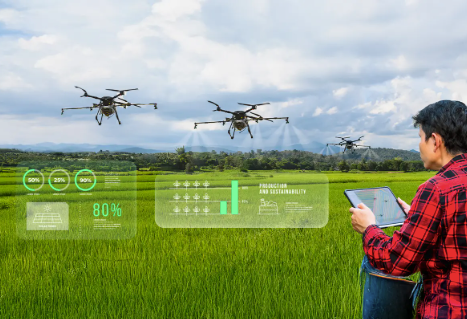
Drones enable rapid, repeatable data collection across varied fields, supporting scalable monitoring and proactive decision-making. By aligning drone capabilities with crop type and field size, farmers leverage sensors for precise sensing, spraying, and planting while safeguarding data privacy and secure storage. Operationally, drones address risk through insurance considerations and optimized battery logistics for continuous coverage. A disciplined, data-driven approach to costs, ROI, maintenance, and piloting fosters measurable productivity gains, yet challenges remain that warrant cautious, systematic evaluation.
How Drones Transform Farm Management
Drones have become a core tool in modern farm management, enabling rapid data collection and targeted decision-making across large and varied landscapes. The approach emphasizes repeatable workflows, quantitative assessments, and scalable monitoring. Operational focus includes risk mitigation through drones insurance considerations and optimized battery logistics, ensuring continuous field coverage, reliable data streams, and timely interventions while maintaining procedural neutrality and freedom of experimentation.
Choosing the Right Drone System for Your Crops
Selecting an appropriate drone system for crops requires aligning platform capabilities with crop type, field size, and required data outputs. System selection should compare sensor suites, flight endurance, and payload flexibility, emphasizing scalable workflows. Economic considerations include drone pricing and long-term maintenance. Data privacy must be assessed through data handling policies and storage security, ensuring compliant, repeatable, reproducible crop monitoring.
Practical Uses: From Sensing to Spraying and Planting
Practical uses of agricultural drones span sensing, spraying, and planting, with each function underpinning a workflow defined by sensor capability, actuation precision, and field conditions.
In sensing, data collection supports seed mapping decisions and crop status assessment.
During spraying, targeted application reduces waste and environmental impact.
Planting employs precise seed placement, while aerial polling informs timely interventions and adaptive management.
Implementing Drones: Costs, ROI, and Adoption Tips
Assessing the costs, ROI, and adoption pathway for agricultural drones requires a disciplined, data-driven approach: initial capital expenditure, ongoing operating expenses, and expected productivity gains must be quantified against farm size, crop type, and management objectives.
Practical adoption hinges on drone maintenance planning, data privacy considerations, scalable piloting, and disciplined benchmarking to balance risk, flexibility, and incremental technology integration.
Frequently Asked Questions
How Do Drones Affect Soil Health Monitoring?
Drones enable frequent soil respiration and nutrient cycling assessments, improving temporal resolution. They quantify weed detection and pest dynamics, supporting targeted interventions; however, interpretation requires ground truthing, standardized metrics, and careful calibration to avoid misleading soil health conclusions.
Can Drones Identify Specific Weed Species Automatically?
Yes, drones can identify some weed species automatically with canopy weed recognition and species specific mapping, though accuracy varies by vegetation, sensor, and phenology, and human validation remains advisable in most practical contexts, ensuring methodical, empirical data handling.
What Privacy Considerations Arise With Drone Use on Farms?
The question concerns privacy considerations arising with drone use on farms. It notes privacy implications and data ownership as central issues, emphasizing methodical, empirical assessment of data collection, access controls, consent mechanisms, and transparent governance for freedom-respecting deployment.
See also: Disaster Recovery Systems Explained
Are There Regulatory Permits Required for Drone Farming?
Regulatory permits may be required depending on jurisdiction, with compliance requirements detailing pilot certification, aircraft registration, and flight restrictions. About 70% of farmers report tightening oversight after audits, illustrating methodical governance guiding autonomous drone farming decisions.
How Do Drones Perform in Extreme Weather Conditions?
Drones performance in extreme weather varies by model and sensor suite; generally, wind, precipitation, and temperature degrade stability, imaging, and endurance. Performance is empirical, dataset-driven, and methodical, illustrating limitations and recovery profiles for informed, autonomous agricultural deployments.
Conclusion
In the field’s quiet ledger, drones are the watchful stewards tallying data instead of grain. Like lanterns along a ridge, they illuminate variability, guiding autonomous teams of sensors, sprayers, and planters toward precise stewardship. Each flight is a measured sentence in a report, converting weather, soil, and crop signals into actionable steps. Through disciplined costs, ROI, and maintenance, the farm grows wiser: a balanced ecosystem where technology and stewardship co-author steadily increasing yields.