What Does Each Style Actually Feel Like With Four People Inside?
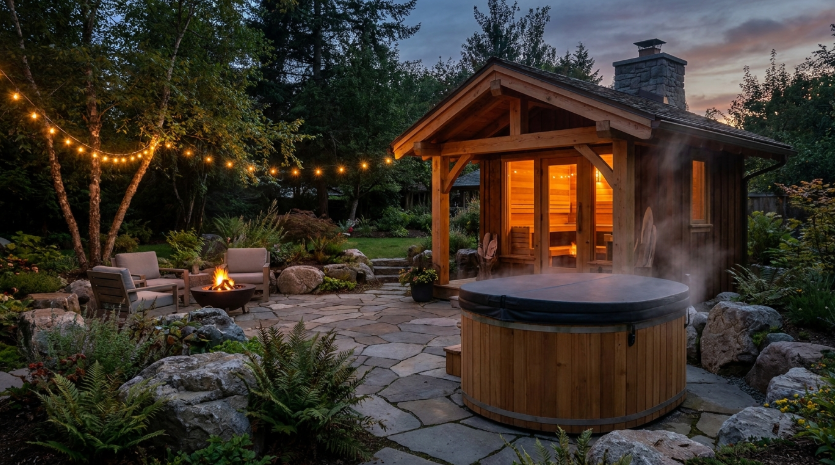
A traditional 4 person cabin at full temperature with steam added feels thick and immersive, the kind of heat that hits within the first minute and makes conversation among four people slower and more relaxed as everyone adjusts. An infrared cabin at the same headcount feels more like sitting near a series of warm panels, comfortable enough to hold a normal conversation from the first minute, with sweat building more gradually over the session rather than arriving fast. Neither experience is better on paper, but they are different enough that trying each style once, at a spa or a friend’s cabin, is worth doing before committing to a purchase for four people who may not agree on which they prefer.
What Separates Traditional Heat From Infrared in a 4 Person Cabin?
A traditional sauna heats the air around a stone bed, and pouring water on the stones adds steam and humidity, producing the intense, enveloping heat associated with classic Finnish-style bathing. An infrared sauna uses carbon or ceramic panels mounted in the walls to warm bodies directly through radiant energy rather than heating the air first, which is why infrared cabins feel comfortable at 40 to 60 degrees lower than traditional units even though users still work up a sweat. Neither approach is objectively better; they produce a genuinely different sensation.
See also: Plumbing Upgrades That Are Best Left To A Licensed Plumber In Sydney
What Does Installation Actually Involve for Each Type?
A traditional 4 person heater at 6 to 8 kW almost always needs a dedicated 240V circuit with a 30 to 40 amp double-pole breaker, and if the electrical panel sits far from the install site, that adds $400 to $1,200 in electrician costs on top of the unit price. Infrared cabins built for four people typically draw 1,400 to 1,800 watts combined across three or four panels, which fits within a standard 120V, 20A household outlet in many cases, though some higher-output infrared models still need a dedicated circuit, so checking the manufacturer spec sheet before buying avoids a surprise electrical bill. Some infrared kits also ship as pre-wired panels that snap into a frame, which cuts assembly time compared to a traditional kit’s separate heater, stone bed, and guard rail installation.
How Do Running Costs Compare Over a Year?
A traditional 4 person unit used several times a week typically adds $15 to $35 a month to a power bill, driven by the higher wattage heater and longer preheat times, usually 30 to 45 minutes to reach temperature. An infrared cabin of the same capacity runs closer to $8 to $18 a month, helped by lower total wattage and a shorter 10 to 15 minute warmup. Over a year, that gap adds up to roughly $85 to $200 in electricity, a real but secondary factor next to the larger difference in upfront unit price.
Which Fits a Cabin, Cottage, or Finished Basement Better?
Infrared’s lower electrical demands and shorter warmup make it a practical fit for a finished basement or a weekend cabin where running a new 240V line is impractical or expensive. A traditional unit makes more sense where a dedicated circuit already exists or is easy to add, and where the household specifically wants the higher heat and optional steam that infrared cannot replicate. Buyers weighing both against their actual electrical setup can compare 4 person models of each type at a dedicated sauna retailer before committing to one path or the other.
Does the Health Research Favor One Type Over the Other?
The bulk of the observational research, including the Finnish cohort studies most often cited, was conducted using traditional high-heat saunas, so the strongest evidence base tracks that style specifically. A 2018 review in Mayo Clinic Proceedings and a 2018 review in Evidence-Based Complementary and Alternative Medicine both summarize associations built primarily on traditional sauna exposure. Infrared use has a smaller, newer body of research behind it, so anyone choosing infrared specifically to chase the cardiovascular associations reported for traditional saunas should know the evidence for infrared itself is thinner, even if the general heat-exposure mechanism is plausibly similar.
How Does Maintenance Compare Between the Two Types?
A traditional 4 person unit needs its stone bed checked and refreshed every one to two years and a door seal watched for wear from steam and heat cycling. An infrared cabin has no stones to replace, but the panels themselves have a rated lifespan, often stated by manufacturers in the 5,000 to 10,000 hour range, and a failed panel typically means replacing that section rather than a simple part swap. Both types need the same basic wipe-down and drying routine after each session regardless of heat source, since moisture management matters equally whether the cabin heats the air or radiates heat directly at the people inside it.
What Is the Honest Bottom Line for a 4 Person Household?
Traditional and infrared 4 person saunas both fit a household of up to four comfortably, and the deciding factors are usually electrical access, budget, and heat preference rather than any clear winner. Traditional costs more upfront and to run but delivers the higher-heat, steam-capable experience most people picture when they think of a sauna. Infrared costs less on both counts and simplifies installation, at the tradeoff of a smaller research base specific to that heating method.
Frequently Asked Questions
How much does a 4 person traditional sauna cost versus infrared? Traditional runs $3,500 to $8,500 installed, infrared runs $2,800 to $6,500.
Does a 4 person traditional sauna need a dedicated electrical circuit? Usually yes, a 240V circuit with a 30 to 40 amp breaker for a 6 to 8 kW heater.
Can a 4 person infrared sauna run on a standard household outlet? Many units drawing 1,400 to 1,800 watts plug into a standard 120V, 20A outlet, though higher-wattage models need a dedicated circuit.
Which runs hotter, a traditional or infrared 4 person sauna? Traditional runs 150 to 195 degrees Fahrenheit, infrared runs cooler at 120 to 140 degrees.
References
- Cardiovascular and Other Health Benefits of Sauna Bathing: A Review of the Evidence, Mayo Clinic Proceedings, 2018
- Does the Combination of Finnish Sauna Bathing and Other Lifestyle Factors Confer Additional Health Benefits? A Review of the Evidence, Mayo Clinic Proceedings, 2023
- Effects of heat and cold on health, with special reference to Finnish sauna bathing, American Journal of Physiology, 2018
By Colin Mercer